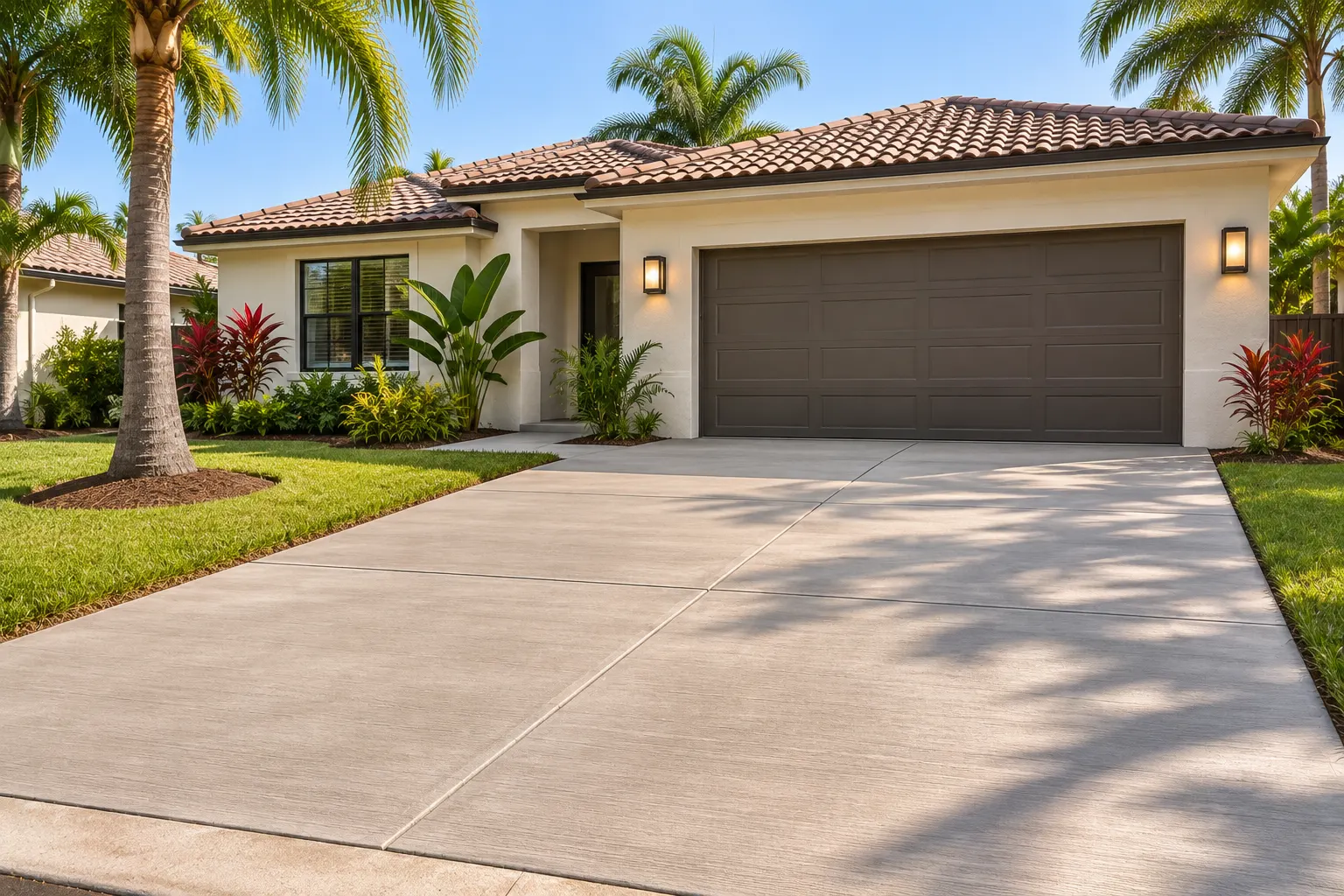
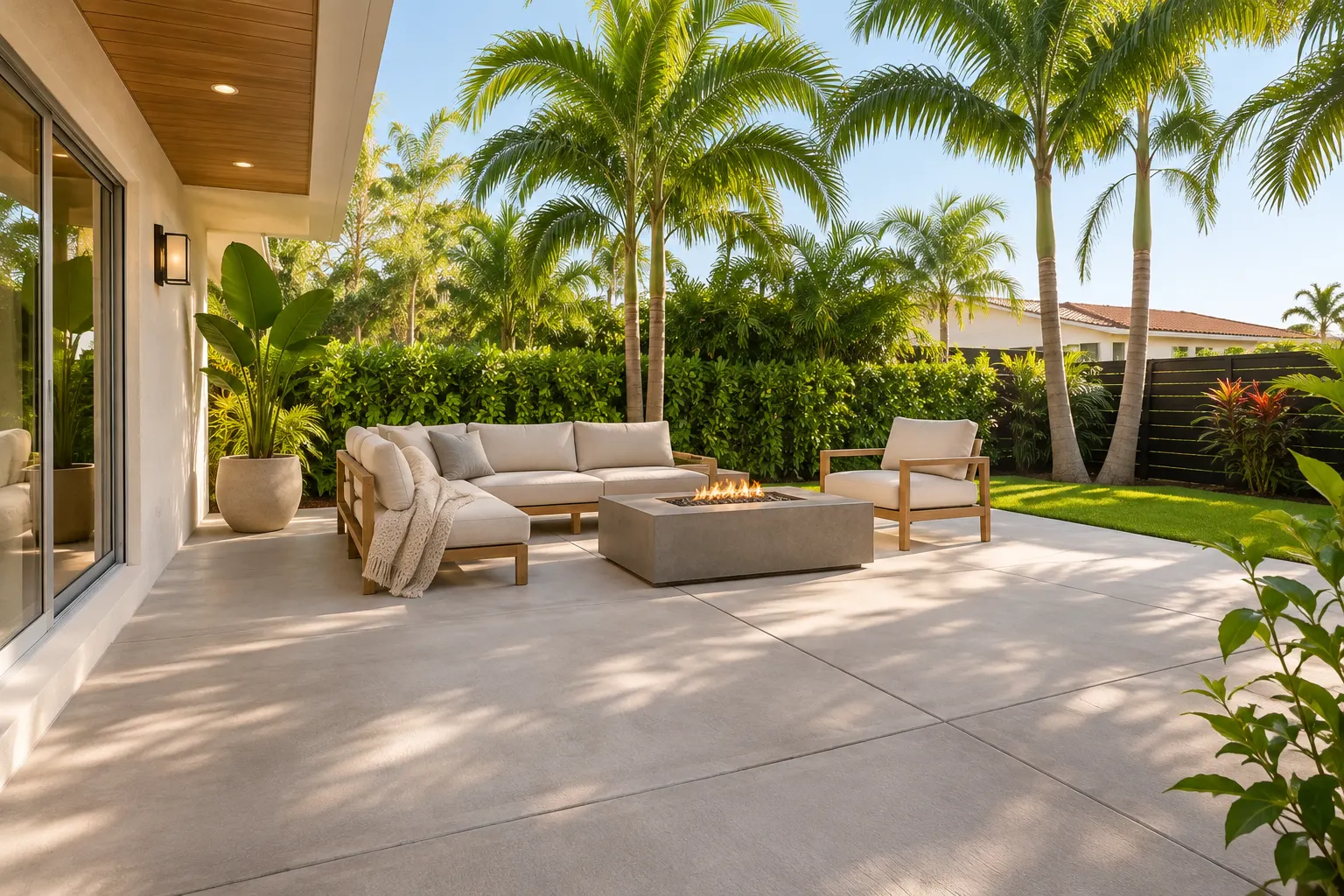
A tired concrete surface doesn't always need to be torn out. Often the slab underneath is sound and only the top is worn, stained or dated, and a new surface costs less and causes less disruption than a full replacement. Other times, resurfacing just hides a problem that comes back. Here is how to tell the difference.
When resurfacing makes sense
- The slab is level and solid: no sinking, no rocking sections, no big height changes.
- Cracks are hairline and not growing or offset.
- The problem is the surface: stains, wear, light scaling, an old coating, or a look you're tired of.
- Water drains correctly away from the house.
When replacement is the better call
- Structural cracks: wide, growing, or with one side higher than the other.
- Settling or heaving: sunken sections, trip hazards, or slabs lifted by tree roots.
- Poor drainage: water ponds or runs toward the house, which a new surface won't fix.
- Spalling with rust stains, a sign that the steel inside is corroding, common near the ocean when the concrete cover was too thin.
- Soft or washed-out base under the slab.
Resurfacing options
- Microcement: a thin, seamless cement-based finish for interior floors, bathrooms and kitchens, often applied over existing tile or concrete. See microcement floors.
- Epoxy coatings: for garages and utility rooms; the concrete is ground and primed, then coated. See epoxy floors.
- Concrete overlays: thin cement-based layers for exterior slabs that can be textured or colored.
- Clean and seal: sometimes a deep clean and a new sealer is all a sound slab needs.
What affects the cost
- Size of the area and how much repair the slab needs first.
- Which system you choose and how many coats it needs.
- Moisture: Hollywood's high water table can push moisture up through ground-floor slabs, which may call for a moisture-tolerant primer.
- Access, furniture moving and working in an occupied home.
For microcement, see our microcement price page. For a new driveway, the driveway calculator gives a starting range.
Florida factors
Sun breaks down coatings and sealers, summer storms test drainage, and salt air near the beach attacks exposed concrete. Whatever you choose, ask how the system holds up to UV and moisture and how often it needs re-sealing.
Next step
Send photos of the surface, a few close-ups of any cracks and a rough size. We will tell you whether it looks like a resurfacing job or a replacement, and confirm at a site visit. See concrete driveways, concrete patios and microcement floors.
Frequently asked questions
Can you resurface a cracked driveway?
If the cracks are hairline and the slab is level, often yes. Wide, growing or offset cracks and sunken sections usually mean replacement.
Is resurfacing cheaper than replacing concrete?
Usually, because there is no demolition, hauling or new base. It only pays off if the slab underneath is sound.
Can microcement go over an old concrete floor?
Yes, if the slab is sound and dry enough. We repair cracks, test for moisture and use a suitable primer first.